न मे द्वेषरागौ न मे लोभमोहौ मदो नैव मे नैव मात्सर्यभावः । न धर्मो न चार्थो न कामो न मोक्षः चिदानन्दरूपः शिवोऽहम् शिवोऽहम्
Na Me Dvessa-Raagau Na Me Lobha-Mohau Mado Naiva Me Naiva Maatsarya-Bhaavah | Na Dharmo Na Ca-Artho Na Kaamo Na Mokssah Cid-Aananda-Ruupah Shivo[a-A]ham Shivo[a-A]ham
Meaning:
Neither do I have Hatred, nor Attachment, Neither Greed nor Infatuation, Neither do I have Pride, nor Feelings of Envy and Jealousy, I am Not within the bounds of Dharma (Righteousness), Artha (Wealth), Kama (Desire) and Moksha (Liberation) (the four Purusarthas of life), I am the ever- pure Blissful Consciousness; I am Shiva, I am Shiva, the ever- pure Blissful Consciousness.
This is Adi Shankaracharya in his Nirvana Shatakam. Even a mind like his describes Shiva, the Mahadev, with no other embellishment than the ever-pure Blissful Consciousness.
And yet, when this Universality chooses to take form, to accept the bonds the corporeal needs, He manifests as a beloved deity of Gomantak.
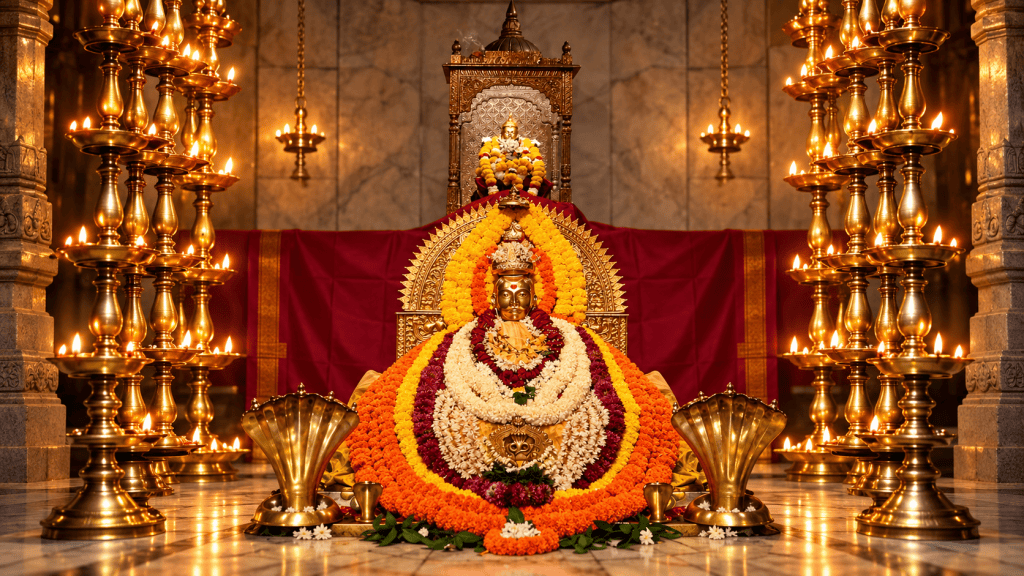
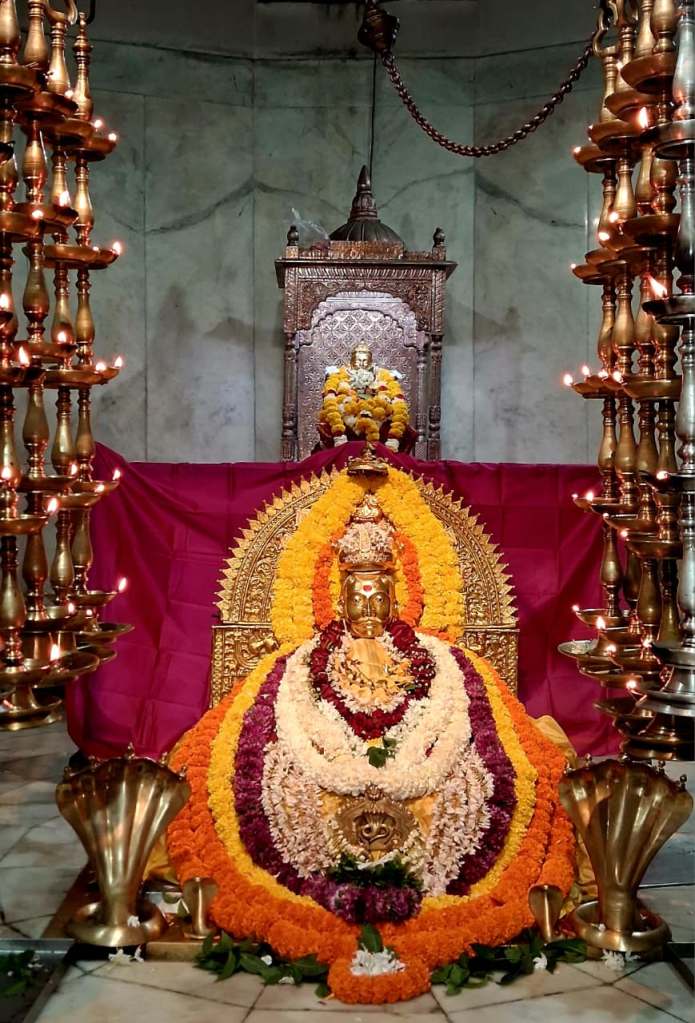
Manguesh of Priol.
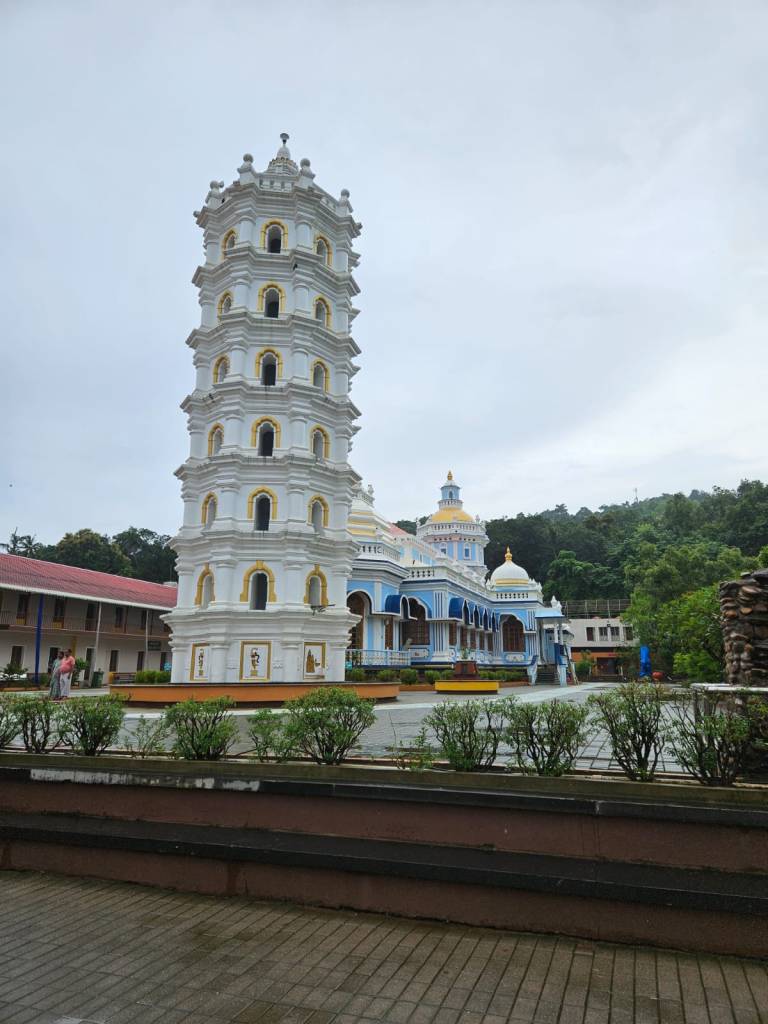
A temple in Ponda, as inviting as it is famous, and as peaceful as it is bustling.
Several legends find their way into its lore, from the Sahyadri Khand of the Skanda Purāṇa to the local Sthala Mahatmya. But each speaks of faith, and of love which has thrived day after day.
The Sahyadri Khand speaks of the relocation of the Panchgauda Brahmins from Trihotrapura to Gomantak at the behest of Parshuram. It says that they brought their deity Maha Girish with them, whose original linga had been consecrated at Trihotra by Brahma Himself, and installed it in Kushasthal (Cortalim), on the banks of the Aghanashini (now the Zuari).
The Sthala Mahatmya has a different, more endearing version: after losing everything, including Mount Kailash, to Devi Parvati in a game of dice, Bhagwan Shiva came to the hills of Gomantak to meditate. Distraught at His absence, Devi Parvati soon came seeking Him. In a moment of playfulness, He took the form of a tiger to frighten Her.
Terrified, She called out to Him to save Her, “Trahi mam Girisha,” upon which He immediately reverted to His original form. At Her request, He took the name by which She called Him, “Mam Girisha,” which later became Mangirish or Manguesh over the years.
For several centuries, the temple existed in Kushasthal until the territory was conquered by the Portuguese. Fearing the destruction of the linga, it was spirited away to Hindu territory in Antruz Mahal, while the original temple itself was destroyed. Housed in Priol in a makeshift structure, the formal complex was built much later, in 1739, thanks to donations from the Maratha suzerains and the local Raja, while major renovations were carried out in 1890 and 1973, when the gold kalash was placed atop the cupola.
While the grandeur of the formal murti in the sanctum, the hammered silver doors and the gold and silver palanquins inspire awe, what moves the heart is the oral history hidden in quiet nooks like the Mulkeshwara shrine behind the main temple and the Tulsi Vrindavan near it.
Mulkeshwara, or Mulki or Mukhto, was a cowherd who lived in Priol. After the Shiva Linga of Mangesh was hidden there, it was forgotten for some time. Mulki found that one of his cows wandered off and returned with its udder empty. On investigation, he saw that it emptied its udder over a particular spot, which was dug up to reveal the Shivalinga. He was hailed as the one who rediscovered the linga, and his shrine exists to this day. Known for his penchant for smoking bidis, they form a main part of the offerings at the shrine to this day.Yet another tale is of a poor devotee who came with his savings of four annas and pleaded with the priests to perform an abhishek seva on the deity. Roundly reprimanding him for his meagre donation, the priests refused. He quietly buried the money in the Tulsi Vrindavan near the temple and left, promising his God that he would return worthy of performing a grand Maharudra.
But he did not walk alone. Manguesh sent His blessings with him, and he found unmitigated success, returning as a rich merchant, when the very priests who had once refused to perform the abhishek now fell over themselves for his patronage. He led them to where he had left his savings and, with a generous donation, decreed that no devotee was to be turned away because he lacked the funds for a pooja, and that an abhishek was to be performed for four annas because his donation would cover the rest of it.
Until recently, the temple did follow the decree, though financial constraints may have raised the amount nominally by now.
Legend, grandeur and miracles apart, what draws me to Manguesh is that He is the Kuldevta of the family into which I was born. While we Saraswat women change to the family deities of our spouses after being wedded, there is something magnetic about the God you belong to as a child. He is the soil that roots you, no matter where the branches grow later.
And thus remains the fascination which began when I was a little girl sitting in a corner of the sanctum, pouting because of the heat, but stubbornly holding the heavy silver horn filled with water to perform an abhishek over the linga.
It is glimpsed in the mandatory visits to the Kaal Bhairav, Veerbhadra, Surya and Garuda shrines which dot the temple complex. It lies in circumambulating the Tulsi Vrindavan in the way my father taught me.
And most of all, it lies in keeping my footwear facing away from Mangesh, in a faith taught by my father: to never look back when I leave the precincts because Mangesh Himself accompanies His devotees till the temple boundaries. A faith that still keeps my father alive in my heart, even after thirty-five years of absence.
Because the greatest gift Mangesh bestows on the devotee is that of accompaniment. The knowledge of who he truly is.
As Adi Shankaracharya says in his concluding verse of the Nirvana Shatakam:
अहं निर्विकल्पो निराकाररूपो विभुत्वाच्च सर्वत्र सर्वेन्द्रियाणाम् । न चासङ्गतं नैव मुक्तिर्न मेयः चिदानन्दरूपः शिवोऽहम् शिवोऽहम्
I am Without any Variation, and Without any Form, I am Present Everywhere as the underlying Substratum of everything, and behind all Sense Organs, Neither do I get Attached to anything, nor get Freed from anything, I am the ever-pure Blissful Consciousness; I am Shiva, I am Shiva, the ever- pure Blissful Consciousness.
Dr Sumedha Saraff-Rege is an ENT surgeon, author and researcher whose work explores Indian history, mythology, faith and cultural memory. Author of The Compromise, Stars Without a Sky and the forthcoming Sambhavami Yuge Yuge.


Leave a Reply