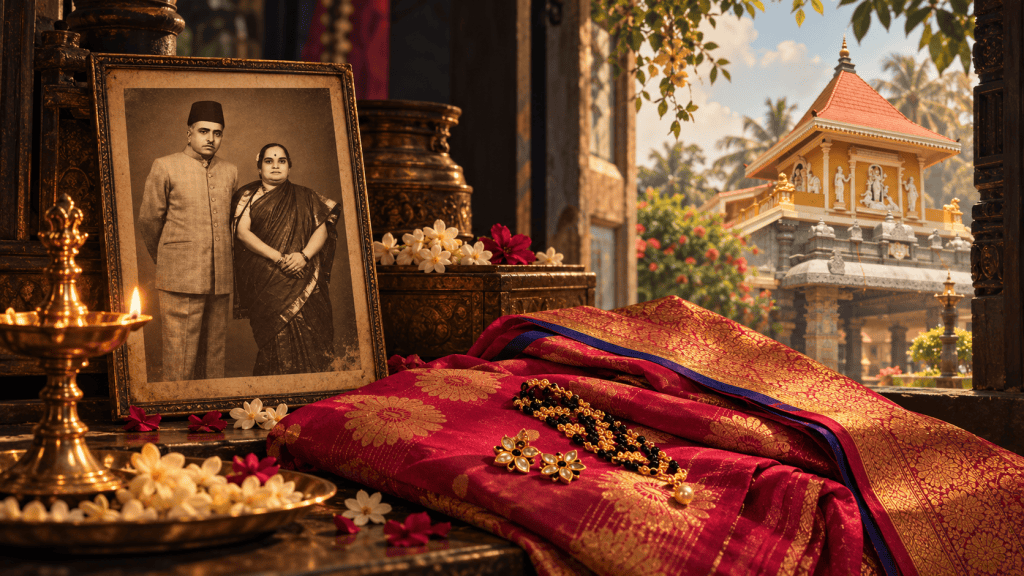
Yaa Devi Sarva-Bhutessu Shraddhaa-Ruupenna Samsthitaa |
Namas-Tasyai Namas-Tasyai Namas-Tasyai Namo Namah ||
To that Devi Who in All Beings is Abiding in the Form of Faith,
Salutations to Her, Salutations to Her, Salutations to Her, Salutations again and again.
Faith. Which guides human lives in different ways. Which helps them accept newer identities without completely erasing the old. And which showed me a strange similarity between a Goan girl who happened to be my grandmother and a Goan Goddess she may or may not have worshipped.
I still recall the day I excitedly held a bunch of jingling keys. I was to open an old cupboard which once belonged to my paternal grandmother.
A woman whom I knew only through a photograph, jewellery and tales recounted by uncles, aunts and cousins who had known her.
The cupboard itself was largely bare, save for a couple of beautiful nauvari sarees, a Paithani, a Chanderi and a velvet blouse. But lovingly preserved in a soft cotton bundle smelling faintly of camphor and memory were beautifully embroidered ceremonial clothes, perhaps worn by my father during his upanayana ceremony.
And an old photograph of a woman with a firm chin and broad forehead, features I saw every time I looked in a mirror.
Suddenly, I was following in her footsteps, walking between worlds, hers and mine, with the same determination.
Sulochana Aji.
My paternal grandmother, whom I never had the privilege of knowing except through the eyes of others.
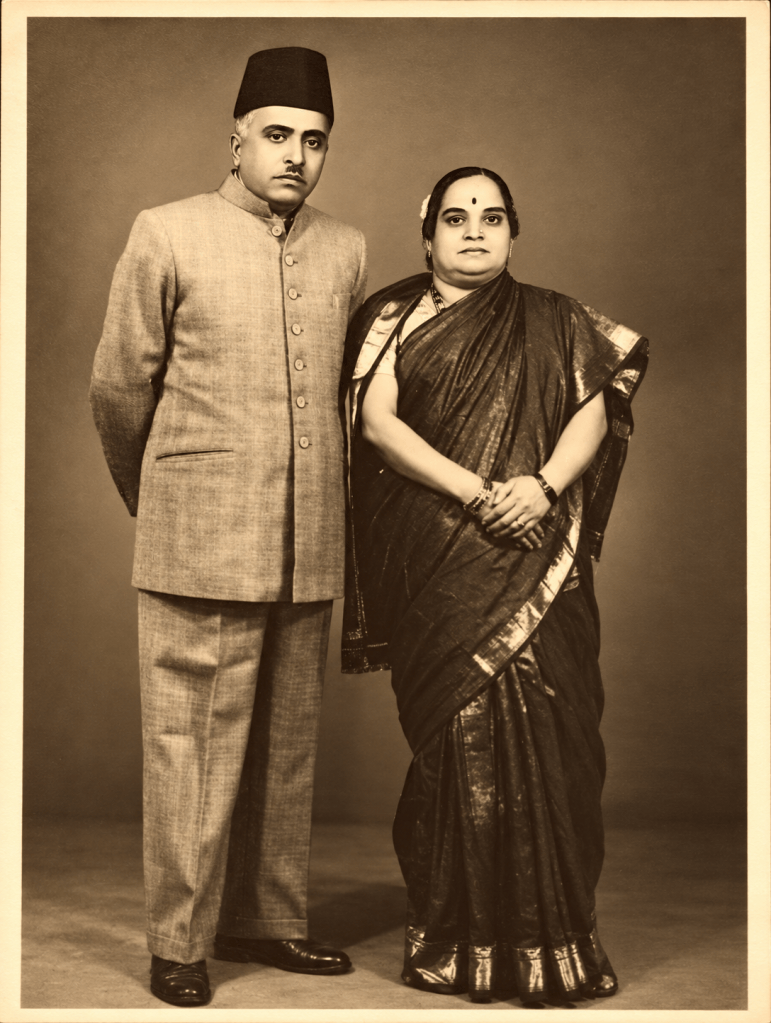
Born in Portuguese-ruled Goa in 1903, she had little chance at formal schooling. But many would one day know the razor-sharp mind which chose its own paths and walked them with tenacity. Family lore recalls the tale of a twelve-year-old girl assisting her father in his shop in Panjim and effortlessly working the small foreign-exchange desk he kept. Goa, being a major port, was a confluence of several currencies, and Aji knew the day’s exchange rates by heart.

But this world was soon to be left behind when she married my grandfather. She moved to the suburb of Shahapur in Belgaum, in British India. Her world changed with those hundred-odd kilometres. A new home, a new family, new customs and traditions. But most of all, a new vegetarian diet for a sixteen-year-old used to eating fish.
But she adapted, gradually becoming an expert at cooking Shahapuri delicacies like kadboli and phutana chutney.
One of the most poignant tales about her as a young wife and mother is of receiving a rare parcel of food sent by her mother. She ate sitting under a tree in the garden because fish was forbidden inside the house.
The woman had adapted, but her identity was unsurrendered.
Years later, at the insistence of her youngest son, my father, the household would adapt a little. A separate kitchen in a distant outhouse, with separate hearths, vessels and plates for the rare meal of fish.
Perhaps life came full circle.
And yet, she remained devoted enough to await the family priest’s completion of his pooja and meal before eating her own.
Marriage and motherhood may have been newer worlds. But they did nothing to dim her enthusiasm. Again, according to family accounts, she helped her husband in investment banking long before IIM came up with the course. Merely by keeping her eyes and ears open, listening to the radio perhaps, and analysing what she heard about industrial stocks.
The arts found expression in her needle. Excellent at embroidery, she won second place with one of her creations in a competition organised by Pfaff, one of the finest sewing-machine manufacturers in the world back then.
A multifaceted life which included providing sanctuary to Shri Ram Manohar Lohia, then a fugitive freedom fighter. A life which straddled many worlds, which broadened and adapted and yet remained its own.
***
Many years passed since I opened that cupboard, and Sulochana Aji remained what she was. A beloved background figure whom I would never know firsthand.
***
But a strange turn of events reintroduced me to the familiar in the Divine.
I have visited the Mhalasa Narayani temple in Mhardol many times because of a close familial connection.
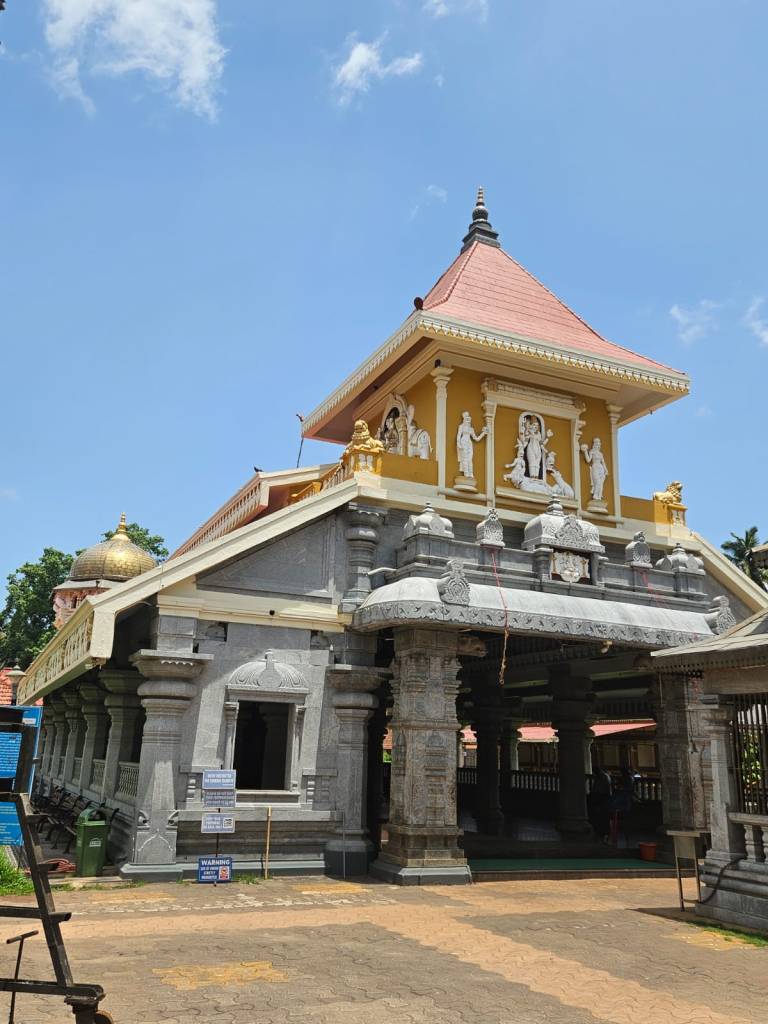
The lore is familiar: a female avatar of Narayan, the idol carved from a single Shaligram Shila, adorned with the yajnopavita or janevu. Brought to Mhardol from Verna to escape Portuguese tyranny. Again, a journey of leaving something previously familiar behind and adapting to the new.
It was only on a recent visit that I realised this beloved form of the Goddess walked between worlds too. As Mohini, whose beauty enchanted the Devas and Daityas alike.
But in whose presence I felt a different power. That of a path which logic said should not exist, but did. Of Her, who was both the veil and the vastness beyond.
A Goddess who perhaps blessed my Sulochana Aji with the ability to walk between different worlds with grace.
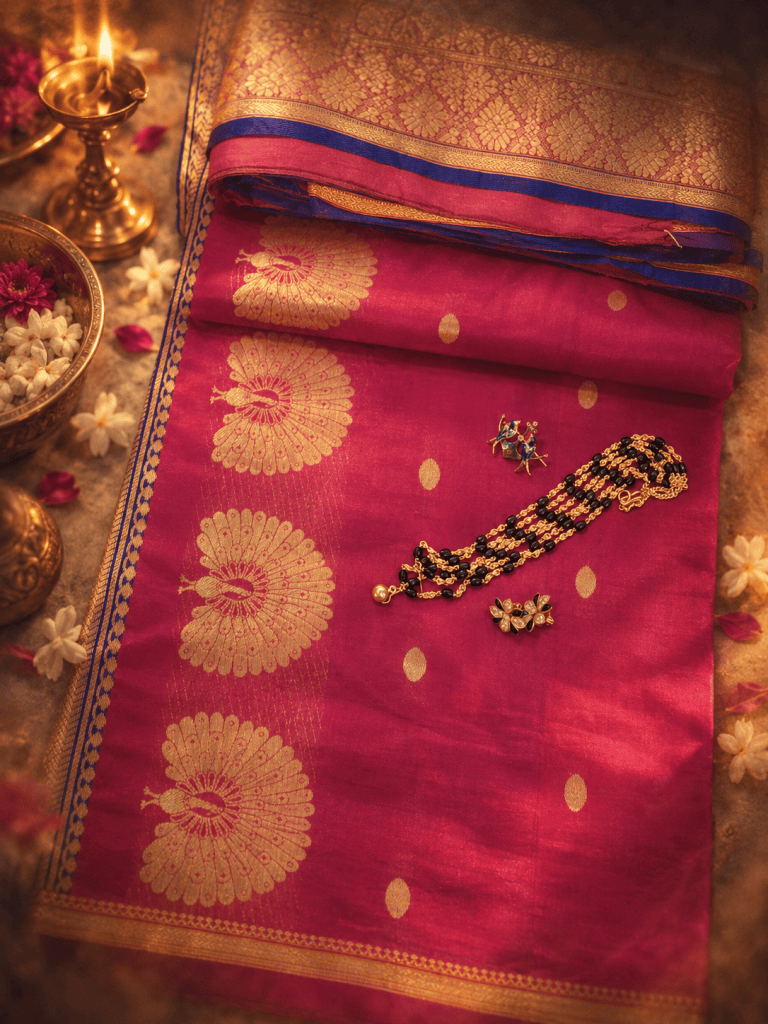
And that is why, this Navratri, when I revere the feminine, I find myself walking between the old and the new with confidence. Clad in an old Paithani and jewellery which connects me to my past. Guided by a Goddess and a grandmother who have left footprints to ensure I’m not alone. Keeping the Goddess and the girl alive through words.
And hence I also chant:
Yaa Devi Sarva-Bhutessu Shakti-Ruupenna Samsthitaa |
Namas-Tasyai Namas-Tasyai Namas-Tasyai Namo Namah ||
To that Devi Who in all beings is Abiding in the Form of Power,
Salutations to Her, Salutations to Her, Salutations to Her, Salutations again and again.
Because She walks between the worlds where Shraddha returns as Shakti.


Leave a Reply