It is Ashwin Shuddha Dashami. The battle has raged long and fierce. And yet… Ravan still stands. Alone, yes, but unvanquished, despite having seen his clan fall one by one.
A fierce battle follows, one which even the Gods gather to witness. The Kodanda twangs incessantly, and finally, Shri Ram invokes the Brahmastra.
It flies like a ray of light and pierces Ravan’s heart.
He topples.
Not a mere victory for Shri Ram. The cleansing He has come for is complete. Dharma wins. Adharma — as ego, anger, hatred and lust — has been destroyed, for now.
But do they remain victor and vanquished still?
मरणान्तानि वैराणि निर्वृत्तं नः प्रयोजनम् ।
क्रियतामस्य संस्कारो ममाप्येष यथा तव ॥ (६-१०९-२५)
“Enmity lasts only until death. Our purpose has been achieved. Perform his funeral rites; he is as much mine as he is yours.”
And with these words to Vibhishan, Shri Ram once again establishes His identity as Maryada Purushottam. For they reveal another, deeper Vijaya: the relinquishing of fury once its purpose has been served. By calling Ravan His own in death, He achieves another conquest altogether.
This is another of the victories of the day we now celebrate as Vijayadashami.
In many parts of the country, Ravan still burns — the symbol of the ultimate triumph of righteousness. But is the teaching limited only to this? Or do the dying flames conceal other layers?
On the surface, the triumph in Lanka seems everything. But what comes later lasts far longer.
It is surrender in action.
Because in His story, He acts rather than speaks.
Shri Ram, with Mata Sita, Lakshman and the triumphant Vanara sena, begins the journey back. But according to the Skanda Purana, something weighs on His mind. At Gandhamadana mountain, He meets sages led by Maharshi Agastya. Knowing them to be souls beyond ego, He asks what penance He must undertake to expiate a sin inadvertently incurred during His battle to establish Dharma.
That of Brahma-Hatya.
Of killing one who, despite being steeped in sin, is still a Dashgranthi Brahmin, a learned man.
The sages laud His actions and know Him to be an Avatara, and yet they do not absolve Him.
Perhaps they understand what He truly seeks to conquer.
They advise Him to pray to the One who stands beyond death. Beyond bonds. Beyond Paapa and Punya.
The One who is pure consciousness.
Bhagwan Shiva.
To establish a linga which can burn the subtlest bond that binds one to the ego: attachment even to a righteous deed. A linga which consumes both merit and sin.
And Shri Ram, the Divine who is human in this Avatara, agrees.
That linga is today famous as the Jyotirlinga of Rameshwaram.
Here, another of Vijayadashami’s most important meanings becomes apparent. Victory over Adharma is necessary. Compassion after victory is greater. Freedom from the very identity of being the victor is a subtler liberation still. And the final liberation is the dissolution of individual identity into the Universal.
Where the worshipper and the worshipped become one.
Where Hari and Hara no longer remain distinct, but unite for the good of the world.
***
Far away, near the shores of the Western Sea, stands another temple, famous as a symbol of this very tradition of unity.
Here, the One who accepts Ravan in death bows before His Ishta, Bhagwan Shiva.
Ramnathi.
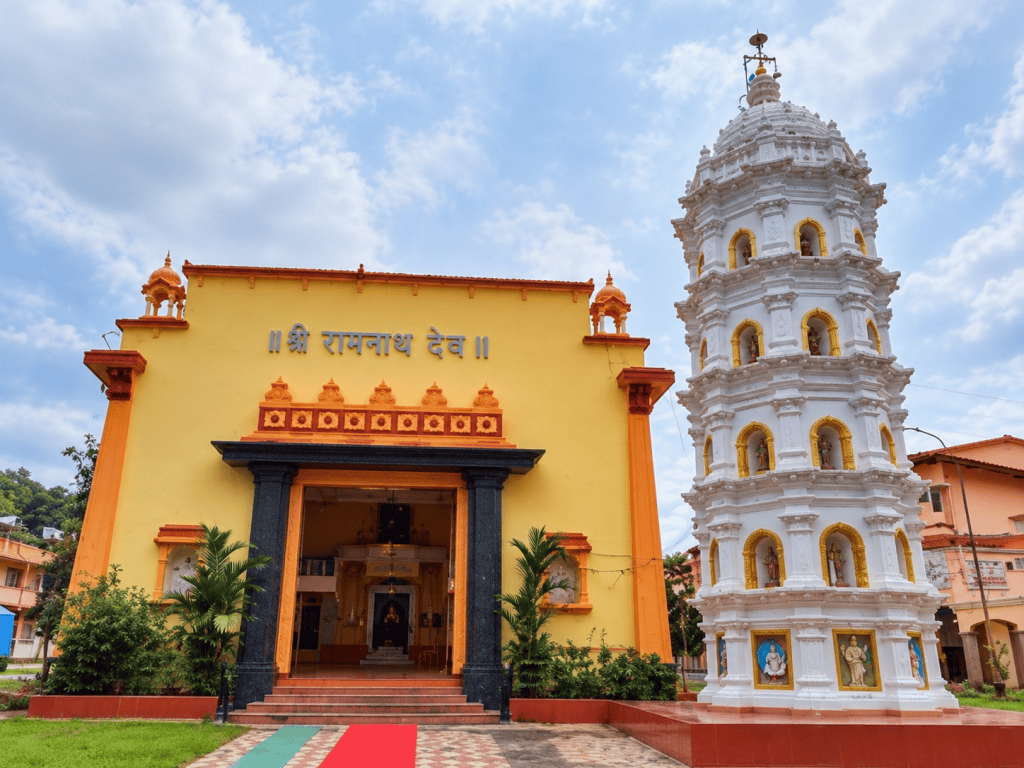
In the village of Bandoda, in Ponda taluka. Once situated in Loutolim in Salcette, the temple was moved here in 1566 to escape Portuguese persecution.
Local lore offers many different tales: that the linga travelled to Loutolim from Rameshwaram, brought by the GSB community as a beloved family deity; that Ramnath is the Shiva whom Shri Ram worships; and, conversely, Shiva who chants the name of Ram as His Nath.
Another legend says that the only thing which could soothe the burning in Shiva’s throat, caused by swallowing the Halahala, was Raam Naam.
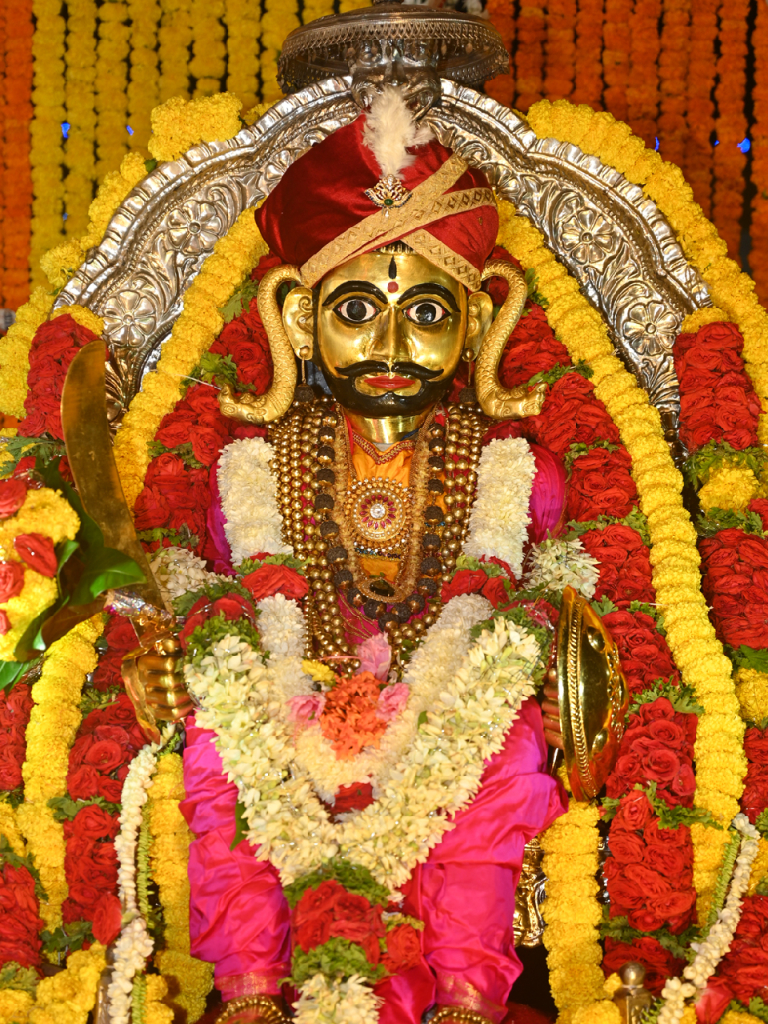
And thus, Ram is His Nath.
In the Ram-Raksha Stotra in the Padma Purana, Bhagwan Shiva tells Mata Parvati:
श्री राम रामेति रामेति रमे रामे मनोरमे ।
सहस्रनाम तत् तुल्यं रामनाम वरानने ॥
śrī rāma rāmeti rāmeti rame rāme manorame
sahasranāma tat tulyaṃ rāmanāma varānane
Meaning:
“O beautiful-faced one, I delight in chanting the holy name of Lord Rama again and again—‘Sri Rama, Rama, Rama.’ This single name of Lord Rama is equal to chanting the thousand holy names of Lord Vishnu.”
But irrespective of the story, the lesson of the Universal — beyond birth and death, merit and sin — remains.
The temple itself houses several deities, collectively known as the Ramnathi Panchishta: Ramnath Himself, Devi Kamakshi, Devi Santeri, Lakshminarayan, the Sidhanath form of Ganesha, Vetal and Kalbhairav.
Each is venerated in its own special way. Each carries its own legend of having arrived in Loutolim, perhaps from Rameshwaram or Kanchipuram, or from Rivona. Each has its own appeal.
Yet standing before them brings a sense of unity. A vision in which the final veil is drawn aside and they all dissolve into the One Eternal.
Perhaps that is why even the Sabhamandap here is unique, with no pillars.
Nothing which divides.
So when one asks, “Who is Ramnath?”, one answer offers the most compelling possibility:
The One who unites everything.
The One who remains after even merit and sin burn at the same altar.
Here, Vijayadashami reveals yet another truth: when the ego burns, the Self is revealed in the Bhasma.
न पुण्यं न पापं न सौख्यं न दुःखं
न मन्त्रो न तीर्थं न वेदा न यज्ञाः ।
अहं भोजनं नैव भोज्यं न भोक्ता
चिदानन्दरूपः शिवोऽहम् शिवोऽहम् ॥४॥
na puṇyaṃ na pāpaṃ na saukhyaṃ na duḥkhaṃ
na mantro na tīrthaṃ na vedā na yajñāḥ
ahaṃ bhojanaṃ naiva bhojyaṃ na bhoktā
cidānandarūpaḥ śivo’ham śivo’ham ||4||
Meaning:
I am neither merit (puṇya) nor sin (pāpa), neither joy (saukhya) nor sorrow (duḥkha)—
neither mantra (mantra) nor sacred pilgrimage (tīrtha), neither the Vedas (vedā) nor sacrifice (yajña).
I am not the act of experiencing (bhojana), nor the object of experience (bhojya), nor the experiencer (bhoktā)—
I am of the nature of consciousness and bliss (cit-ānanda-rūpa). I am Shiva, I am Shiva.
And through it, we follow the footsteps of Maryada Purushottam: where Adharma bows to Dharma, and where Vijaya finds its highest fulfilment by bowing to Vairagya.


Leave a Reply